


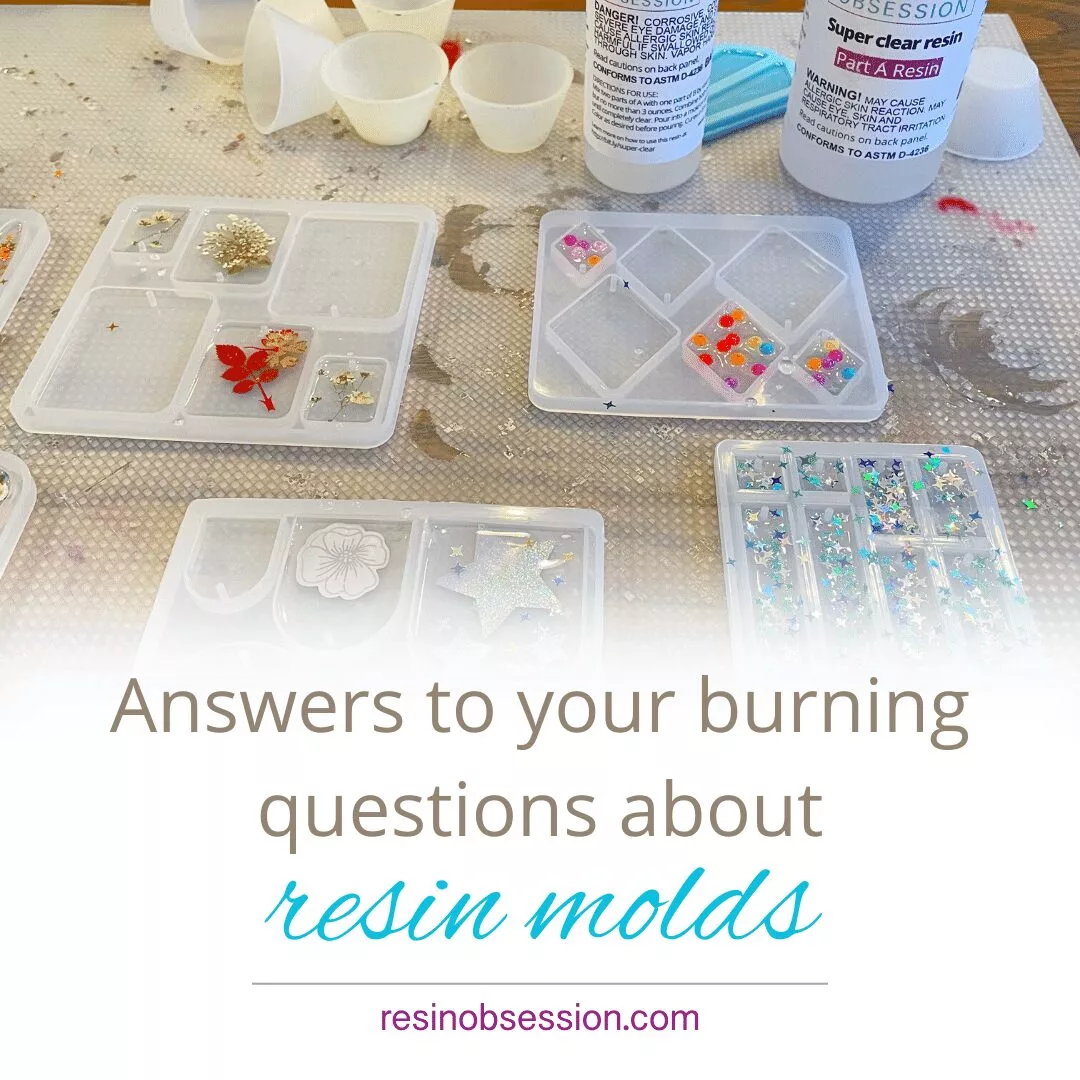
You’ve decided to make resin crafts using molds for resin. And you’ve got questions… *Are resin molds expensive? *Can you use anything as a resin mold? *Will you need to do anything special once your resin comes out of the mold? Here’s the good news — you’re on the right track to be thinking about […]
Category: Resin Frequently Asked Questions
What are the types of resin? And Why It Matters.

I’m guessing you’re here because you’re overwhelmed by all the resin types out there. You’re not alone. I get messages like this all the time. * You’re ready to take on a project. * Then buy resin for that project. * But overwhelmed because you don’t want to use the wrong one and mess up that project. Here’s […]
The Ultimate Epoxy Resin Buying Guide (Updated for 2024)

You’ve got a project in your head, and epoxy resin is what you need to bring it to life. Now you’re on a mission to buy resin and need someone (or something) to guide you to the right one. Because you don’t have endless resources or an endless pocket for this project. You want to […]
How to Seal Paper for Resin (Updated April 2026)

Hey there, crafty cool kids and memory hoarders! One of the most frequently asked questions I get asked is how to put paper in resin. After long trials and many, many errors I have finally found the perfect techniques! Ready to dip your toes (or rather, your papers) into the sparkly pool of resin art? […]
How to Remove Resin From Almost Anything

Hey there, crafters! I know we have all found ourselves in a sticky situation, literally, with resin everywhere – on your hands, clothes, or even your carpet (hey spills happen!). Well, fear not, for I bring you the ultimate guide to de-resin-ify your life! Let’s get un-sticky and get help to remove resin! How to […]
What’s the Difference Between UV Resin and Epoxy Resin?
Understanding UV Resin vs Epoxy Resin: A Comprehensive Guide If you’re diving into the world of resins for your projects, you’ve probably come across UV resin and epoxy resin. They’re like the superheroes of the crafting world, each with their own special powers and weaknesses. Figuring out which one to use can feel a bit like […]
How to Measure Resin So It Cures COMPLETELY

So you’ve heard me talk a lot about mixing resin so it cures without sticky spots. (The #1 resin beginner mistake.) But it’s important you accurately measure resin liquids too. Why is it important that you measure resin accurately? If you don’t have enough of each of the liquids, you’re resin won’t get hot enough […]
5 Waterproof Repairs You Can Make With Epoxy

Did you know epoxy resin is waterproof? If not, you’re missing out on the greatest thing since bread for fixing things around your home. Mixed resin creates a waterproof, chemical-resistant, and strong bond. And chances are you’ve got leftover resin after creating your epoxy art. The properties of epoxy can help you tackle many tasks […]
Why is my resin bendy? 5 reasons for flexible resin

Made resin coasters that could be a Gumby stunt double? Yeah. That can make you say curse phrases like skinny monkey carcass. Now you’re asking yourself, why is my resin bendy? There are a few reasons why this happens: 1. Your resin needs more time to cure While resin is curing, it turns semi-solid (think […]
Why Is My Resin Thick? 3 Reasons for Syrupy Epoxy

At some point, as you are mixing epoxy, you may find yourself asking, ‘Why is my resin thick?’ It can be alarming to work with resin and worry you’ve done something wrong. Here’s the good news. It isn’t that unusual and may not even be a problem. So here are a few reasons why your […]